Saturday, April 30, 2011

"Me, I do not look like myself, I am lonesome"


So often we are clouded by others' judgements, expectations and desires that we forget ourselves. We forget WHO we are, where we came from. I have come to a very complex understanding or at least realization that we transform into many things and that those things may only be part of us, not our whole. I have been contemplating this idea that we can wear many "hats" or faces to become many people. I have practiced this for months and sometimes I realize I fall in love with it- but it has transformed into more of a phrase: "fake it to make it". I notice this in Shakespeare's characters (Prospero) and myself. Guilty Or successful? Those hats- these faces, can be poisonous to us, but if anything we have the experience of being what we want, think we need to be, or really are. I think about this everyday. Who do I want to be? Who SHOULD I be? I had a conversation with someone recently and ironically enough, it was the person who really taught me that we need to wear many faces just to get by (though they probably don't know that). Sometimes it is just plain necessary. We may be wearing a different face, like Hermione, but the face we really have continues to stay with us, age, we are old and new all at once. I pulled some quotes from Shakespeare that portrayed this idea of confusion within ourselves about who we are and how we get to the place of understanding and becoming. I truly think that for any of us though, it takes us meeting our end to get back to our beginning, to us. I am leaving it to you to define "end".


Who are you?

"art ignorant of what thou art" (The Tempest I:2:18)

"Sometimes we are devils to ourselves" (Troilus and Cressida IV:4:94)

"I am not what I am" (Hamlet I:1:66)

"He who flatters you makes war upon your life" (Pericles I:2:45)

"More than I seem, and less than I was born to" (Henry IV pt.3 III:1:56)

"Who is it that can tell me who I am?" (King Lear)

"...no life
...no breath at all? Thou'lt come no more;
Never, never, never, never, never." (King Lear V:3:303-306)

"I am bound upon a wheel of fire, that mine own tears do scald like molten lead" (King Lear IV:7:46-48)


Who am I? what deceives me into becoming something else? "If you have poison for me, I will drink it. I know you do not love me..." (King Lear IV:7:71-72).

These adjectives cluttering my mind just won't do...

The final day of presentations. I have to start with saying, I thought I knew what I was in for. I had lunch with Jenny and knew she would be singing, and of course it was going to be an amazing presentation (that goes without saying) but I didn't realize what chord it would strike. Again, I will do a brief overview of the presentations and what I took from it, but it will not reflect the actual experience well enough.

Brian: Worte a song, but have to check his blog for the video he was going to upload.

Rachel: Primary and secondary imagination (Coleridge); Prospero as Shakespeare himself; The play within the play; Shakespeare as myth maker

Lauren Scull: Has images on her blog; Andromeda and Perseus; The Tempest; Parents and originals

Shelby: Aesthetic Dignity; Eternal; Negative Capability; Beauty and the Sublime (greater, more complex, limitless compared to beauty); KEATS!; Reunion and recognition; Bloom on Cymbeline; Caliban's speech (III:II); Shakespeare's plays extend into the sublime

Spencer: Final scene and final act of Cymbeline; "Hats"; Not only mything the point, but missing the point; End of the play, the characters realize who they are.

Joe- "Nothing" in Shakespeare; pronunciation of nothing; power of imagination; "To be or not to be"

Lauren: Othello; Iago- the ultimate Tarquin (evil villain); Self- destruction; Richard White- Iago as a character we love to hate

Jenny: "If I die Young"; image of the pearl; Absolutely amazing, I really had to pull myself together to make it through this presentation.

Riley: Iago- burns down the town with his words; Bloom on Othello; Muse of fire (Henry V); Zeus: Pandora (women plague the men)


Shakespeare: remembrance, tragedy, loss, redemption, bitterness, and love.

Heartbreaking and Memorable

There are no words to describe how extraordinary the individual presentations were. As Dr. Sexson said in class, I described them as "heartbreaking and memorable" during a conversation with him. I missed day 1 of the presentations since I was in Minnesota for a much needed break from here, but heard they were spectacular, I missed out. Day 2 of presentations was the day that I would say was especially memorable for many reasons. James, the most courageous and raw of the presentations was inspiring and saddening. I am at a loss as to how to describe his presentation, it was a moment you had to be there for, it can't be captured through my blog. I realize I don't even have notes on his presentation because I was too wrapped up in his presenting. As for the other presenters who also did a wonderful job, here is a brief overview from my notes:

Alex: Manipulating events: alls wells that ends well; fortune/ nature/ gods

Jon: Hamlet & Remembrance; prodigal son. Hamlet: Who am I? Immortality through art

Melissa: Nature; levels of the christian world; "Hell"- Lear's madness; love made of purer substance; Shakespeare captures the emotional tragedy AND the physical

Craig: How do we escape our roles? It is so easy to be somebody else. Human Identity.

Karinne: Higher truth/ transformation/ disguises: What you learn about yourself through deception

Nathan: We should be conscious of what role we play in history and analyzing/ questioning history; Redemption? Kott's faith of humanity is shaken; New historicism; Prospero is tinged with bitterness. Leonardo DaVinci- history repeating itself and a struggle for power. Everything can change and nothing can change; Bitterness; Soliloquy- act V- prospero has to give up existence. What part of the past are you anchored in?


I thoroughly enjoyed all of these presentations! I am in awe of how unique each person is in their topics that they choose. It reflects who they are as people, what interests them and as a class we are so lucky to have the chance to listen to such intelligent and passionate speakers!

Wednesday, April 27, 2011

The Vale of Soul Making in Keats and Shakespeare

The Vale of Soul-making in Keats and Shakespeare

“I am not what I am”
(Othello I:I:66)

I wake from my dreams in a sweat, tears streaming down my cheeks. It all seems so real, built off remembrances of yesterdays. Dreams of people I loved, they reach deeper, to a world that I have not yet been to. I want to believe that Keats’ negative capability can exist, but I doubt myself so often and wait. It has taken me years to realize that while I adore and perhaps obsess over Keats’s words; I will never fully understand them.

Keats and Shakespeare, two of literary history’s greatest figures, use words and images throughout their works that allow us to connect to remembrance and kenosis on a deeper level. Words thread the soul together creating a bond between the reader and the work that is unique to each individual. Shakespeare does this through his sonnets, plays, and most memorable to me, his poetry. Keats’s remembrance is most evident in his poems and letters, specifically to Fanny Brawne. These connections that are formed create a bridge from the real to the mythological. Venturing through these worlds, the real (the social world) to the mythological (a world of insight and ecstasy), helps us to better understand Keats’s idea of negative capability and how important the act of remembrance is. Shakespeare’s characters specifically, reflect an understanding of human nature and the psyche that somehow impacts each and every one of us.

From the moment that Keats receives a collection of Shakespeare’s works, he is struck by Shakespeare’s ability to portray human suffering, love, deceit, and history within his writings yet is able to leave things as they are. Keats once wrote that Shakespeare was “capable of being in uncertainties, mysteries, doubts, without any irritable reaching after fact and reason”. Keats looked to Shakespeare and was inspired by his writings enough to conform to the idea of negative capability himself as well. Negative capability means that we are able to examine the world without desire or reconciliation of certain things.

Being given the power to explore within our imagination, we are allowed to set ourselves aside in order to understand others and the worlds we are a part of. I emphasize “worlds” because we move so often from the mythological to the real, sometimes so much that we are unable to distinguish them. I strongly believe that this is why Shakespeare is such a powerful writer because his characters help us to make this connection. Connecting on a deeper level, through what is most original in us, the soul reflects who we truly are while also making us aware of who we have become or think we have become. If anything is true it is that in fact “sometimes we are all devils to ourselves” when we fail to remember who we are.

I used to look at the “vales” in Keats’ “The Vale of Soul Making” as a representation of an unveiling of sorts. It was as if they were the next stone in the pond as we leap across. But now, as I have been studying Shakespeare and his characters within his plays and poems, I realize that those vales could actually serve as distortions. They cloud the soul, and it seems that they represent the deceptions, lies, and untrue things in life. We are able to hide behind or within these vales, deep in the soul where we are kept from who we really are. Shakespeare mentions the idea of “powerful graces” and shows how they are so easily able to be twisted (Richard III). When we allow power, love and hate, or desires to enter into our soul they can distort the real. Phillip Newell in Shakespeare and the Human Mystery emphasizes, “the journey towards wholeness involves a confronting of the shadow and a turning from the false self” (Newell 3). It also involves clearing out cobwebs and finally finding the strength and courage to accept what is really there.

What we so often fail to realize is that we are all very much the same. We all share a beginning that originated from something much deeper than we can understand. Perhaps our beginning is incomprehensible until we have reached our end. Looking at Shakespeare’s characters, we can move closer to this understanding by finding something in them that is also within ourselves. I believe that while we connect with Shakespeare’s characters, we have to be careful to not allow them to create us, but rather awaken within us what we have forgotten. Reading Shakespeare’s works, it is impossible not to notice how they rise and fall simply to rise again, or sometimes they just fall. They always reflect the process of going through tragedy and being reduced to nothing though with such beauty. The process of unveiling becomes a process of recovery and discovery for both Shakespeare’s characters and us.

What do we remember most as we enter this process? It seems we always remember what we wish we could forget. The pain of betrayal, and that, which inspires, hurts and makes us. The act of remembrance is sometimes clouded though by what we think we remember, which in fact is not at all what we remember. In regards to Shakespeare, King Lear and Miranda present themselves most clearly in my mind. King Lear looks to Cordelia to remember who he was and realizes that he does not even know himself. Lear becomes almost desperate in his attempt to remember asking, “who is it that can tell me who I am?” (I:IV). I think we can all think of a time when we have asked ourselves this. We forget so easily who we are because we are caught up in the social world where chaos and vocation take over us. King Lear does not realize that he has no idea who he really is though until he loses everything, which is then when he is able to see everything.

Miranda traces back through the mythological in order to reach her beginning. She is so childlike and innocent in the way that her beginning is told to her, recounted through storytelling. For many of us, this is how we come to understand where we came from. In the social world, the idea of beginnings seems to be irrelevant to us, but as we venture through the mythological we begin to understand more. Mythology brings us to the core of remembrance and origin into that "dark and backward abysm of time" (The Tempest I:II).

I have become lost in Shakespeare’s works in a way that only I could understand and even I do not fully understand. I am attracted to his tragedies, as are all of us as humans. Connecting through the loss of love that lives solely through my remembrances. I am constantly held down by who I want to be and who I am. Remembrances sometimes carry a weight with them, but it is impossible to rid ourselves of them. I am realizing as I am writing this paper that we should remember and be honored that we do. If we can remember, then we can know that we have lived, loved, and maybe lost but most importantly we experienced. We live. Immortality is achieved through our words and remembrances. They thread not only our soul, but our world.

The worst has not yet come. I am not laughing. I am not crying. So the worst is not upon me. I know this because I still remember, love and breathe new life each day. Even death will not make me forget, but I fear that forgetting may be my death. My final vale.

Tuesday, April 26, 2011

I'm "happy". "Really happy"...


Putting together my paper, I was looking at an interview with James Hillman- an interesting man to say the least. At the end of the interview, I took a second to stop thinking so deeply and just smile. I hate how much this poem related to my day- perhaps I ran into it for a reason. A poem by a Japanese Monk, Ikkyu-

"You do this, you do that
You argue left, you argue right
you come down, you go up
This person says no, you say yes
Back and forth
you are happy
you are really happy"

Hillman:
"What he is saying: stop all that nonsense. You're really happy. Just stop for a minute and you'll realize you're happy just being. I think it's the pursuit that screws up happiness. If we drop the pursuit, it's right here."

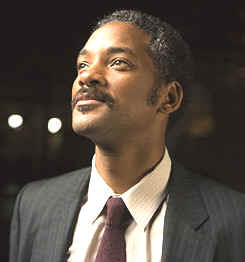
Thanks a lot Will Smith for perceiving happiness as a pursuit.

Cheers to...Nothing.

Wednesday, April 6, 2011

my mind- my own tempest

The only magic there? A cape of snow covering the road and hiding the mountains. I tried to slow but it wasn't fast enough...my mind wandered too far from me. my thoughts were lost in an earlier conversation which, like the snow, never should have occurred. Tears blurred that curve ahead and curses shot through me. Sliding into a darker abyss, that guard rail stopped more than just my thoughts, calming the tempest in my head and making me aware of the storm that truly existed. The only thing between us, cracked glass.

What more could you ask for in a moment of regret, fear, and desire for redemption than the words of Shakespeare.

Monday, April 4, 2011

Red Wine, Mistakes, Mythology


The muses are simply one way in which Mythology ties in with The Tempest, easily overlooked, but very important. Through storytelling, dreams, history, belief, and magic- mythology circles around becoming so real and creating imagination within the characters and the readers. The Tempest reminds me of so many fairytales, all intertwined. Elements of Sleeping Beauty, Snow White, and The Wizard of Oz, are all apparent. The potions, dreamlike states, and remembrances that take place in these fairytales and The Tempest create illusions that confuse what really happened or why. Miranda becomes exhausted by the telling of Prospero’s story that she falls asleep. This reminded me of a dream I once had a few months back (still seems like yesterday). I dreamt, woke up and was shaken by this horrible event that occurred in my mind, only to find out a few hours later that in fact it was my own reality. I had simply dreamt of the future. I always laugh at palm readers, magic 8 balls, and horoscopes. But this time, there was no laughing, instead there were tears and I cried like never before. I was in disbelief, overcome by something so powerful, something I hope to never feel again. Just as Prospero’s story exhausted Miranda, my dreams exhaust me. I am awake, but I long to sleep again because the dreams I am caught in are more exhausting than reality itself.

All we ever want is to be “free”. I put that in quotations because what is freedom really, and what is it that any of us want to be free from? Everything and nothing. Freedom is liberating, but frightening. Prospero tells Ariel that soon he will be free as a bird, if he obeys his orders. The exchange of these words brought to mind a quote I read saying that even birds are not free, for they are chained to the sky. So what is freedom? When we are living our realities, we are not free. We dare to dream, but even there, we are not free.

The red wine aids in my poor decision making, and I wish it was in fact it was mythology that I was recalling rather than my reality.